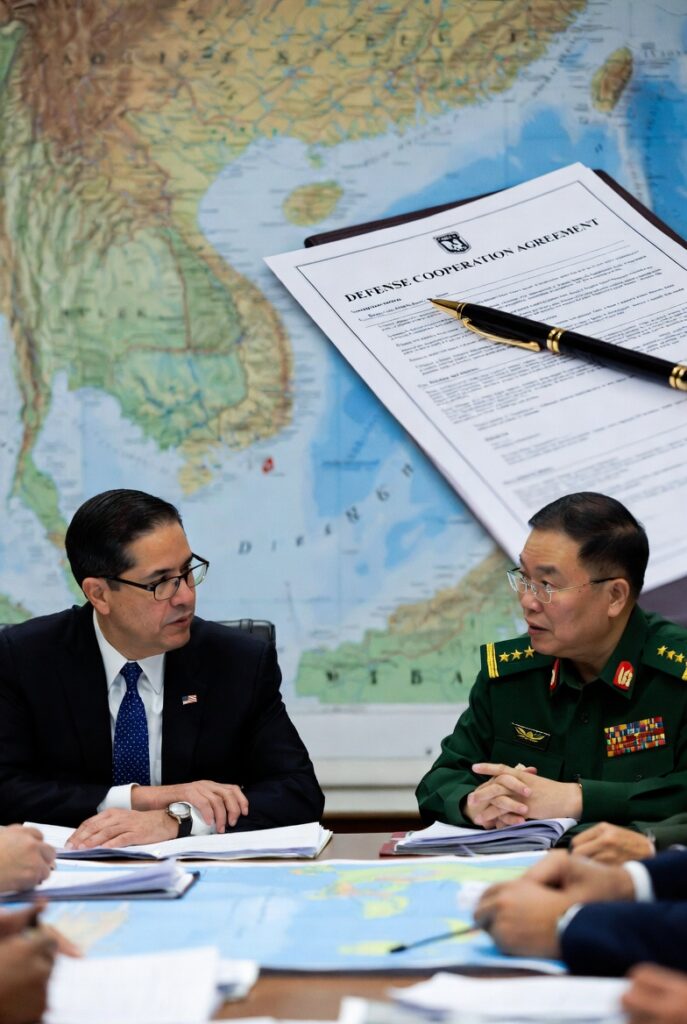
Introduction:
Recent revelations from leaked Vietnamese defense documents, published by The 88 Project, shed light on the complex relationship between Vietnam and the United States. Despite a significant warming of diplomatic, economic, and security ties in recent years, the Vietnamese military continues to perceive the U.S. as a potential strategic threat. This analysis unpacks key insights from the documents and explores the implications for future U.S.-Vietnam relations.
Key Findings from the Leaked Documents:
- Operational Preparedness: The Vietnamese armed forces are actively updating their operational plans to counter any potential U.S.-led invasions or Western-backed interventions. This indicates a proactive defense strategy aimed at mitigating perceived threats.
- Perception of the U.S.: The United States is framed within these assessments as an “imperialist” and “belligerent” power. This characterization showcases the lingering historical suspicions that influence military thinking in Vietnam.
- Defense Strategies: Preparations include securing coastlines, implementing modern guerrilla warfare tactics, deploying air defense systems, and being wary of scenarios in which the U.S. might employ “human rights” or “democracy promotion” as pretexts for interference.
- Low Immediate Threat, High Vigilance: While the documents suggest that the immediate risk of war with the U.S. is low, they underscore the necessity for constant vigilance, reflecting concerns over Washington’s perceived aggressive behavior.
Context of U.S.-Vietnam Relations:
The backdrop of these findings is the remarkable improvement in U.S.-Vietnam relations since the normalization of diplomatic ties in 1995, which has recently evolved into a Comprehensive Strategic Partnership. This diplomatic progress has been fueled largely by shared worries over China’s actions in the South China Sea, positioning Vietnam as a key partner for the U.S. in countering Chinese influence in Southeast Asia.
A Disconnect Between Diplomacy and Military Perception:
This situation highlights a profound disconnect between the public-facing diplomacy and the historically rooted suspicions within Vietnam’s military establishment. Despite the visible cooperation with the U.S., Hanoi appears to maintain a hedging, non-aligned defense posture. While engaging with the U.S. on practical matters, the military continues to plan for worst-case scenarios involving Western powers.
Conclusion:
In conclusion, as Vietnam and the United States continue to grow closer, particularly for strategic balance against China, the leaked military documents reveal underlying distrust of Washington as a potential long-term adversary. The interplay between deep-rooted concerns and contemporary diplomatic efforts illustrates the complexity of Vietnam’s defense strategy moving forward. Understanding these dynamics is crucial for both nations as they navigate this evolving relationship.