

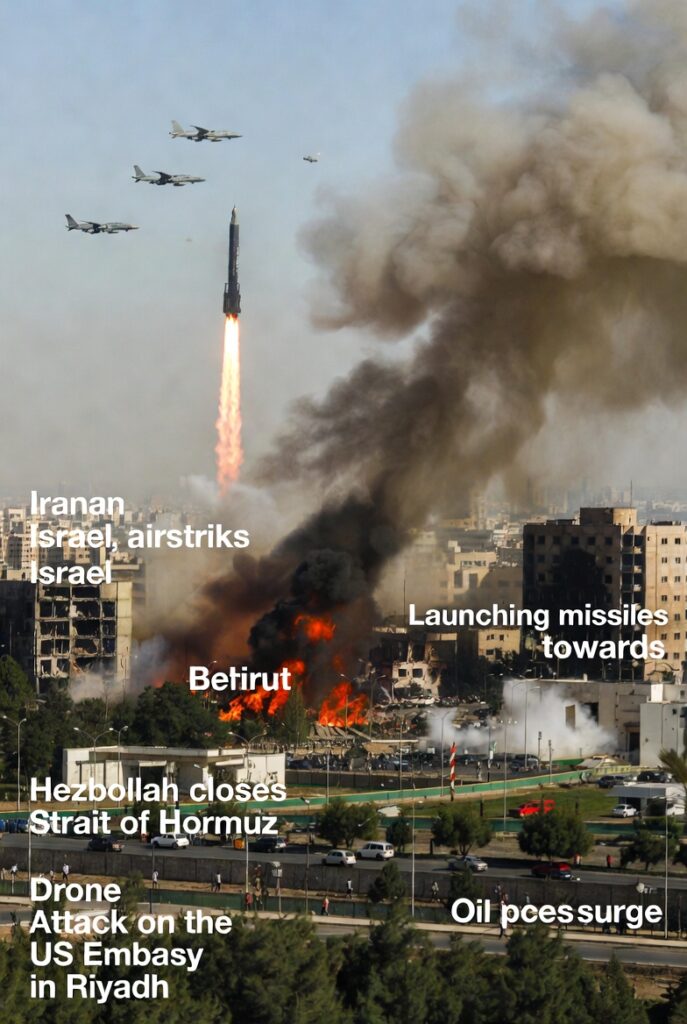
Israeli Strikes on Tehran and Beirut: Israel conducted airstrikes on Tehran, hitting areas near the old parliament building and the Iranian state broadcaster (IRIB) headquarters, with explosions reported across the city. In Beirut, repeated raids targeted southern suburbs like Haret Hreik and Dahiyeh, leading to a death toll exceeding 600 in Iran and Lebanon combined. Israel issued evacuation orders for 59 areas in southern Lebanon, citing Hezbollah activities, resulting in thousands displaced and sleeping on streets or in schools.
US Military Involvement: US Central Command (CENTCOM) claimed to have destroyed Iranian Revolutionary Guard Corps (IRGC) command facilities, air defenses, missile sites, and airfields. Analysts predict further US strikes on Iran’s ballistic missile arsenals once air dominance is secured. Iranian Foreign Minister Araghchi accused the US of entering the war on Israel’s behalf without an imminent threat.
Iranian and Hezbollah Retaliations: Iran’s IRGC announced the closure of the Strait of Hormuz, threatening attacks on ships and pipelines to pressure the US. They claimed a massive drone and missile strike on a US air base in Bahrain, destroying infrastructure. Hezbollah launched a drone swarm on Israel’s Ramat David Air Base in retaliation for Lebanese strikes.
Other Incidents: Two drones struck the US Embassy in Riyadh, causing minor damage. A drone was shot down near Erbil airport in Iraq, and Israel intercepted drones from Lebanon. Oil prices surged (Brent up 2.2% to $79.44, WTI up 1.6% to $72.40) amid fears over the Hormuz closure and attacks on Gulf energy infrastructure.
Broader Context: The chain of events began with US attacks on Iran in anticipation of retaliation, followed by Iranian strikes on US assets in Bahrain and the UAE, and Hezbollah’s response. Russia is reportedly benefiting from the distraction, easing pressure over Ukraine. No direct quotes from Trump appear in the updates, despite the headline reference to his statement on the war lasting four weeks.