Outbreak Details
- Confirmed Cases: Five infections, including two nurses (one male improving, one female critical in ICCU), a doctor, another nurse, and a health worker—all linked to the same hospital. Patients have been transferred to an infectious diseases hospital in Beleghata, Kolkata.
- Index Case: A patient treated by the initial nurses died before testing; treated as suspected source.
- Quarantine and Testing: Around 100 people in home quarantine; 180 tested (all negative so far), with 20 high-risk contacts monitored for 21 days due to incubation period of 4-14 days (up to 45).
- Response Measures: West Bengal health department issued guidelines for isolation, PPE use, and contact tracing. National advisories to states for AES monitoring in patients with West Bengal links.
Nipah Virus Overview
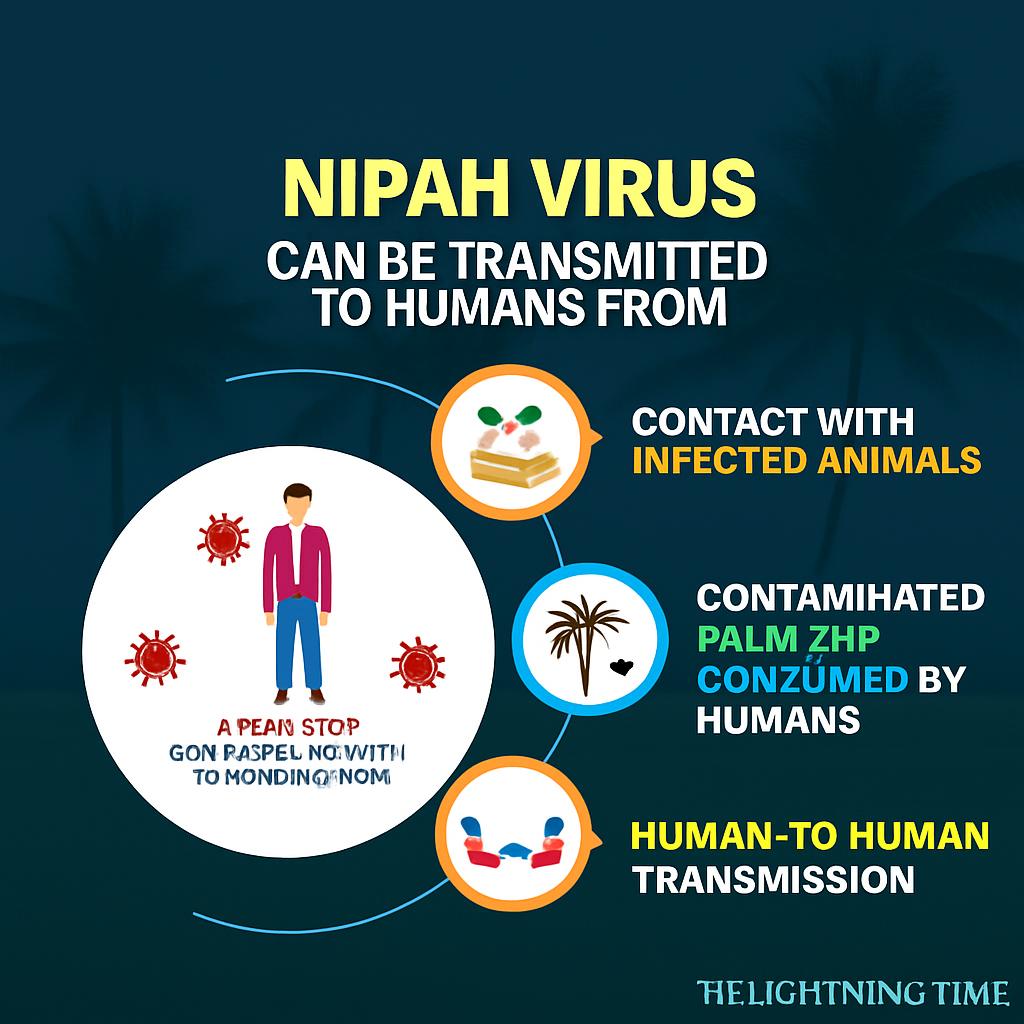
Nipah virus (NiV) is a bat-borne zoonotic pathogen, mainly from fruit bats (Pteropus species), transmitted via contaminated food, animal contact, or human-to-human through bodily fluids.Outbreaks since 1998 in South/Southeast Asia; India saw cases in West Bengal (2001, 2007) and Kerala (since 2018).
Transmission Risks:
- Animal-to-human: Bat saliva/urine/faeces on food.
- Human-to-human: Close contact, especially caregivers.
Signs and Symptoms
Symptoms range from asymptomatic to fatal encephalitis (fatality 40-75%).
- Early (flu-like): Fever, headache, muscle pain, vomiting, sore throat.
- Progression: Dizziness, drowsiness, altered consciousness, atypical pneumonia, acute respiratory distress.
- Severe: Encephalitis, seizures, coma (within 24-48 hours).
Incubation: 4-21 days typically.
Treatment and Prevention
No vaccine or specific antiviral; supportive care only (e.g., managing symptoms, ventilation). Early detection, isolation, and PPE critical.
Prevention Tips:
- Avoid contact with bats/animals; wash hands after handling.
- No raw date palm sap; cook food thoroughly.
- Quarantine contacts; surveillance in high-risk areas.