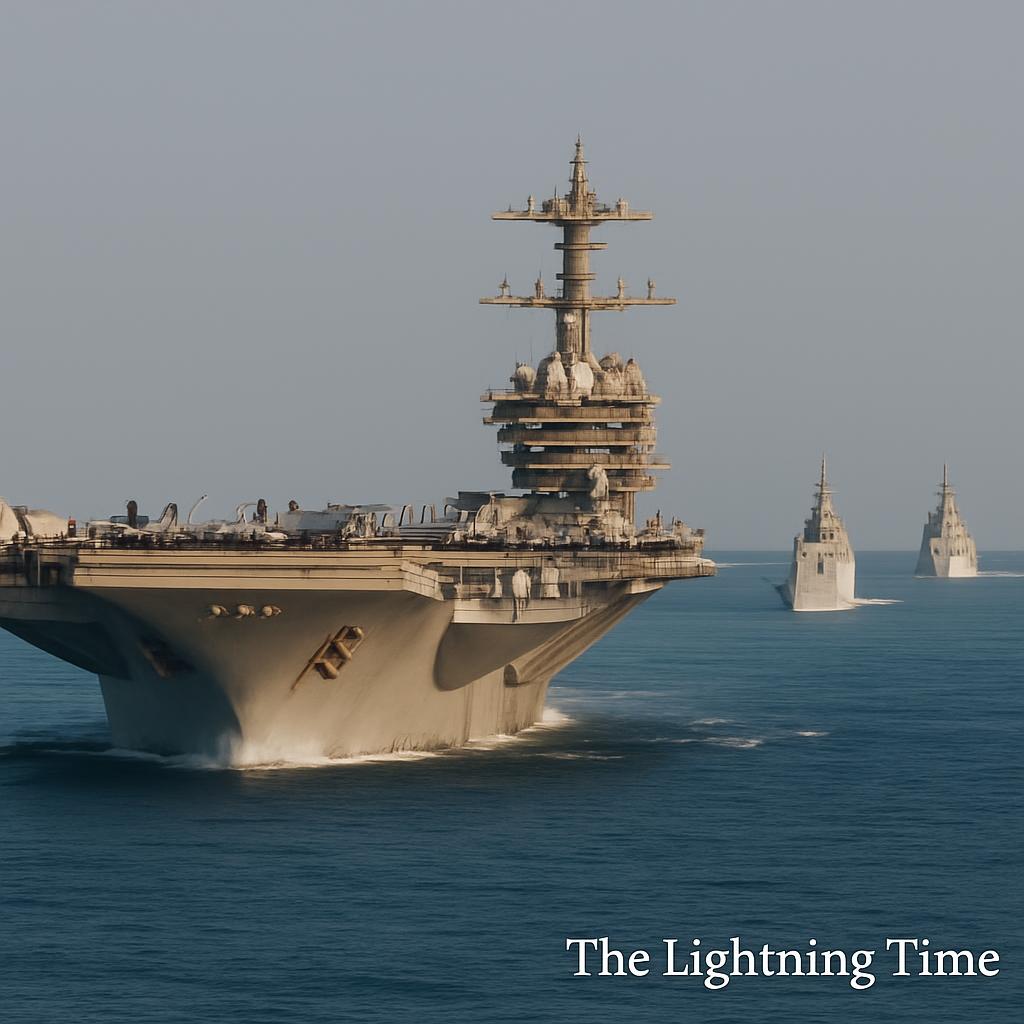
The United States announced a multi-day aerial military readiness exercise in the Middle East on January 27, 2026, led by the Ninth Air Force (Air Forces Central, or AFCENT) under US Central Command (CENTCOM), amid escalating tensions with Iran following its crackdown on anti-regime protests.
Exercise Details
AFCENT described the drill as a demonstration of the ability to deploy, disperse, and sustain combat airpower across the CENTCOM area of responsibility, which spans the Middle East and parts of Central and South Asia.Key objectives include:
- Validating rapid movement of personnel and aircraft to multiple contingency locations.
- Testing dispersed operations, logistics sustainment with minimal footprint, and integrated multi-national command and control.
- Conducting activities with host-nation approval, in coordination with civil and military aviation authorities, emphasizing safety and respect for sovereignty.
Lt. Gen. Derek France, AFCENT commander, stated: “Our airmen are proving they can disperse, operate and generate combat sorties under demanding conditions – safely, precisely and alongside our partners.”CENTCOM emphasized that the exercise reinforces “peace through strength” to deter aggression and assure partners.
Regional Context and US Military Posture
The announcement follows the arrival of the USS Abraham Lincoln Carrier Strike Group, including accompanying warships, in the Middle East, boosting US firepower and defensive capabilities.President Donald Trump referred to it as a “beautiful armada” sailing toward Iran, expressing hope for a deal while not ruling out strikes after Iran’s protest crackdown, which killed thousands (estimates range from 6,000 to over 36,500).
- Iran has threatened retaliation against US and Israeli targets, with IRGC air forces at high readiness.
- Allies like Saudi Arabia and the UAE have ruled out use of their airspace or territory for potential US attacks.
- This builds on prior US actions, including strikes on Iranian nuclear sites in June 2025.
Broader Implications
Experts view the drills as a signal of US power projection capability beyond routine training, amid speculation of strikes on Iran.Iranian responses include summoning foreign diplomats over related criticisms, while Israeli officials call for dismantling Iran’s proxies (Hamas, Hezbollah, Houthis). Trump has alternated threats with openness to negotiations.