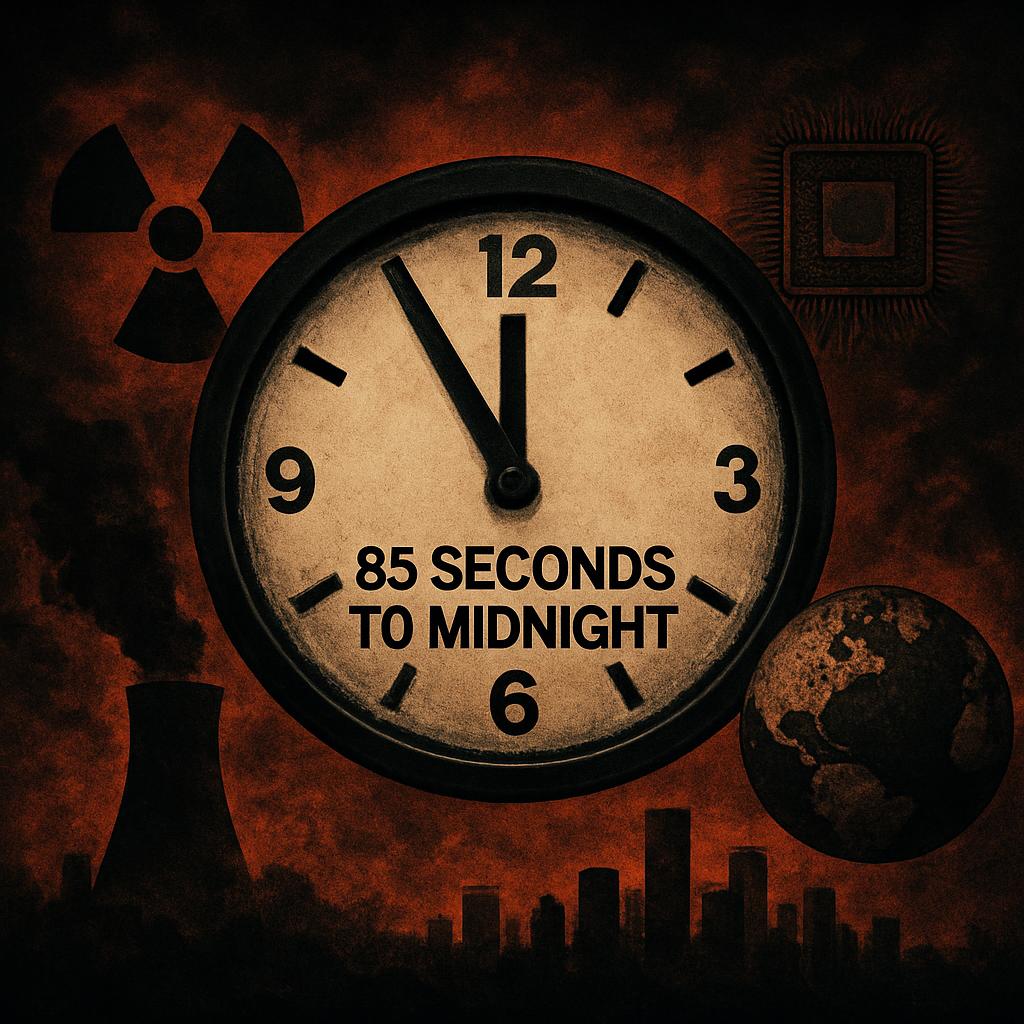
The Doomsday Clock for 2026 has been set to 85 seconds to midnight, the closest it has ever been to midnight, symbolizing heightened global risks of catastrophe.
Background on the Doomsday Clock
The Doomsday Clock, maintained by the Bulletin of the Atomic Scientists since 1947, serves as a metaphor for humanity’s proximity to global annihilation, with midnight representing apocalypse. Originally set at seven minutes to midnight post-Hiroshima and Nagasaki, it has fluctuated based on nuclear threats, international cooperation, and emerging dangers.
2026 Announcement Details
- Announced on January 27, 2026, by the Bulletin, a nonprofit of scientists, Nobel laureates, and leaders.
- Moved forward 4 seconds from 89 seconds in 2025 (itself advanced from 90 seconds in 2023-2024).
- Closest setting in history, surpassing prior records amid escalating global tensions.
Key Reasons for Advancement
The Bulletin cited worsening threats, including:
- Nuclear risks: Aggressive postures by nuclear powers, undermining disarmament norms and international law.
- Climate change: Ongoing environmental crises exacerbating instability.
- Biological threats: Potential misuse of biotechnology.
- Disruptive technologies: Rising concerns over artificial intelligence.
Historical Context
| Year/Period | Time to Midnight | Notable Events |
|---|---|---|
| 1947 (Debut) | 7 minutes | Post-WWII atomic bombings. |
| 1991 | 17 minutes (farthest) | U.S.-Soviet arsenal reductions, SALT treaty revival. |
| 2023-2024 | 90 seconds | Heightened nuclear and climate tensions. |
| 2025 | 89 seconds | Further escalation. |
| 2026 | 85 seconds | Record closest amid multiple threats. |
This adjustment underscores calls for civil society action to reverse trends through leadership on peace and nuclear abolition.